Presidents Session
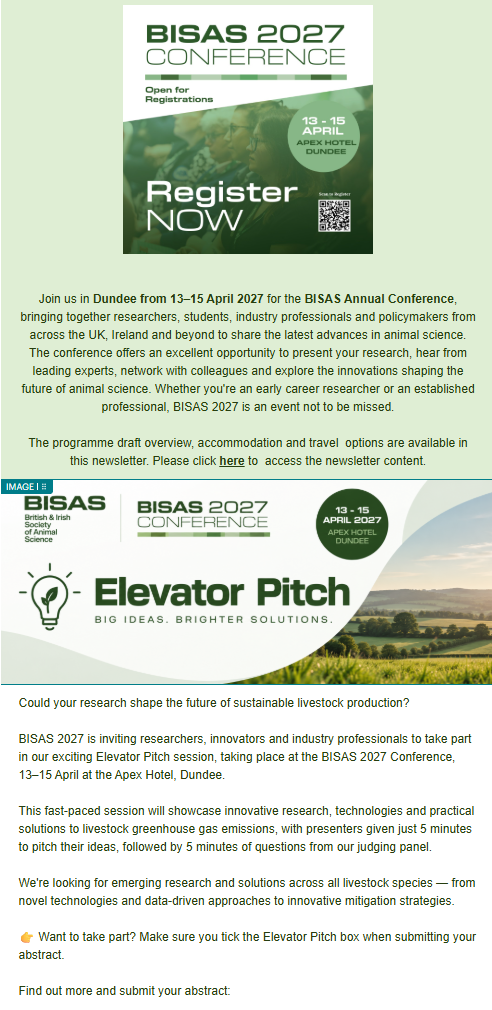
https://www.bisas.org.uk/events/article/bisas-2027
Update WC 27th July 2026
Introduction
This Award has been established to honour the contributions which Professor Christopher Wathes OBE made to animal science, in particular through improving the welfare of farmed livestock. The awards are intended to help members of BISAS to attend scientific meetings and workshops in the UK or overseas who might not otherwise be able to go through lack of financial support. The award is targeted at early career scientists.
Who was Christopher Wathes?
Christopher was an outstanding and uncompromising scientist who acted on evidence and always challenged ill-informed opinions. He was strongly supportive in developing the careers of his younger colleagues. His career began with a degree in physics followed by a PhD in environmental physics. In 1980 he became a lecturer in animal husbandry at the University of Bristol. Here his interest in the impact of housing design on farm animals led him to develop expertise in the field of animal welfare including the use of preference testing. In 1990 he moved to Silsoe Research Institute to head their bioengineering division, where he was at the forefront of the newly emerging field of precision livestock farming. He then joined the Royal Veterinary College in 2005 as their first Professor of Animal Welfare, where he also developed a strong interest in animal ethics. Christopher chaired the Farm Animal Welfare Council (FAWC) for eight years from 2005, working with a wide range of stakeholders to develop a clear strategy and produce a number of highly relevant reports, which have a lasting impact on the welfare of farmed livestock in the UK. He was also instrumental in the formation of EuroFAWC, providing a platform for informed debate and development of shared policy relating to animal welfare throughout Europe. He was awarded the 2002 Research Medal of the Royal Agricultural Society of England and the 2016 UFAW Medal for Outstanding Achievements in Animal Welfare Science. He received an OBE in 2013 for services to animal welfare.
Competition
The award must be used for travel, accommodation and/or registration to attend BISAS 2027. The value of each award will be determined by the distance travelled by the applicant from their place of residence to Dundee. This award supports studies involving animal welfare, precision livestock farming, design of animal housing or ethical considerations relating to the use of animals. To enter you must have submitted an abstract to BISAS 2027 and provide a short video clip (2-3 mins) stating why you should win this award. The maximum amount awarded will £1500. The award may be split to offer more than one bursary.
Criteria
This award supports studies involving animal welfare, precision livestock farming, design of animal housing or ethical considerations relating to the use of animals.
Review of competition entries
Applications to the Christopher Wathes award will be assessed based on the submitted video clip. In making its decision, the selection panel will consider the relevance of the applicants work in meeting the above criteria please include reference to/ information about this in the video, and the extent to which you will benefit from attending BISAS 2027, please tell us how the award would be of benefit to you.
Reporting requirements
The award holder will be required to submit a short report to BISAS following their attendance at BISAS 2027, which focuses on the benefit in knowledge and skills gained from winning the award.
Questions?
If you have any queries, please contact awards@bsas.org.uk
What is the prize?
The maximum amount awarded will be up to £1500.
How do I apply?
The award is open to applicants from all branches of animal science who are in the early stages of their careers. Applications are accepted from BISAS members only. Please send your video clip to awards@bsas.org.uk Please include your full name and contact details in the email.
Application deadline
31st January 2027
Click here for the downloadable information leaflet.
OBJECTIVES
The objectives of the Animal Science UK and Europe consortia are:
To encourage collaboration between UK and European scientists in the field of animal science by:-
Supporting membership of key Europe-wide organisations that provide a platform for scientific discourse and collaboration.
Enabling UK-based animal scientists to attend meetings and conferences that provide opportunities for collaboration with European scientists.
Resulting in the generation of collaborative research and development projects that will provide sustainable livestock production for the public good
Disseminating knowledge and information resultant of above
POSITION
The Animal Science UK and Europe Consortium currently has funds to support UK membership of The European Federation of Animal Science (EAAP) and the Animal Task Force (ATF) taking UK membership of these organisations to the end of December 2027. The consortium would like to see this membership secured for at least five years.
This membership unlocks a wealth of opportunities: a vast network of animal scientists, reduced fees for the EAAP Annual Meeting, and invaluable prospects for early-career scientists to network, train, and collaborate internationally.
Let’s ensure our animal science community thrives by supporting this initiative. The Fund's primary aim is to uphold EAAP & ATF UK membership, but it will expand to support other vital initiatives that enhance collaboration for UK and Irish animal scientists.
BISAS is acting as the secretariat, on behalf of UK animal scientists, and invites support from individuals and organisations passionate about animal science, including academia, industry and personal donations. BISAS is also contributing resources, highlighting the importance of this collective. Donations to the European Collaboration Fund can be made here.
ENGAGEMENT
If you would like to get involved in the Animal Science UK and Europe Consortia steering group please contact Maggie Mitchell.
ATF ACTIVITY UPDATES
The Australian Association of Animal Sciences (AAAS) is the national professional body supporting animal scientists across Australia through advocacy, professional development, knowledge exchange, and collaboration. AAAS fosters scientific excellence and innovation in animal research, production, and welfare, providing a platform for networking, mentoring, and representing the interests of its members across academia, industry, and government.
AAAS’s unique, inclusive approach, allows everyone involved in animal science – from students, to industry professionals and researchers – to meet and learn from each other.
At the national level, the AAAS Biennial Conference provides an excellent opportunity for members to meet, exchange information and ideas and discuss the very latest advances from the world of animal science and production. At branch level, meetings are convened at regular intervals to discuss topics of local or national interest and to provide a forum for members to raise matters of importance.
Our AAAS values are
- Professional integrity
- Evidence based science
- Ethical, sustainable animal enterprises
- Lifetime support
AAAS membership will allow you to connect with practicing animal scientists throughout Australia and internationally
Affiliations
AAAS is part of a global network of animal science. We are members of:
Established in 1965, WAAP represents a federation of nations and regional societies or associations having the same goals. WAAP aims to encourage closer collaboration between the animal production organisations and to bring together scientists, educators, technicians and administrators with the objective of reviewing development concerns on the five continents.
WAAP hosts a World Conference on Animal Production every five years, with the next meeting to be held in Melbourne, Australia in 2028.
AAAP was established in 1980 to provide connections between animal scientists in Asia, Australia and New Zealand. The biennial conference is an important scientific forum for the region, with the next congress to be hosted by Australia and AAAS in 2024.
Our history
In 1954 a group of Australian scientists decided that they needed a society to provide the then-burgeoning activity of applying science to animal production with a forum that allowed sharing of ideas, a biennial research conference, and a dedicated research publication. Each state established branches of the Australian Society of Animal Production (ASAP), which held regular meetings to discuss current research and extension developments. A feature of the early society was the inclusion of producers in branch activities and the biennial conference. Early career graduates were introduced to the legends of animal science and production, and used the conference to form networks and learn how to deliver messages from their scientific research. This society contributed enormously to the current success of animal production in Australia.
Times change, and the society gradually diminished in its relevance to researchers, students and others involved with animals, for a range of reasons. Those involved with different individual animal species started their own societies, scientists preferred going to their own discipline meetings, and other relevant groups began to service animal agriculture. In 2018, the ASAP federal council met in Sydney to develop a strategy for invigorating the society based on broader engagement across the animal sciences – and the Australian Association of Animal Sciences (AAAS) was born!
Natural Stockcare is a family-owned and operated business run by father and son Jack and Eoin Ryan. Together, with their dedicated team, they bring insights, expertise, and a wealth of experience, ensuring that every product manufactured meets the highest standards. Established in 1984, known initially as Natural Bacterias, a vet practice market for livestock products, Natural Stockcare have since evolved their range and name.
For more information visit https://naturalstockcare.com/
About us
We are an organisation of professional graduates who are working or who have worked in the agri-food industry in Northern Ireland.
Members are engaged in farming, scientific research and development, government and policy formation, education, finance, agri-food management and commercial sectors.
What are our aims?
Promote the study and development of agricultural science and associated disciplines;
promote and maintain professional standards in the fields of agricultural science and associated disciplines;
promote lifelong learning and increase knowledge and understanding between professionals (members and non-members) in the fields of agriculture and associated disciplines, through organised activities; and
support the education and career development of those pursuing a career within the agri-food industry.
What do we do?
Each year we organise a series of events, visits and seminars that reflect the latest thinking and issues that impact the agri-food sector. Some of these are member-only events. As well as providing unique opportunities for members to expand their professional knowledge base, each event provides valuable networking opportunities with colleagues right across the agri-food industry in Northern Ireland.
We also support future agricultural graduates through participating in mock interview sessions, attending careers conventions and providing career information sessions.
This BISAS Award, supported by AHDB, honours exceptional communication of animal science and celebrates creative and impactful engagement with broader audiences. Deadline for application - 28th February 2027.
Award Leaflet | Application/Nomination Form | Judging Criteria
Recognising those, working in animal science, agriculture and related areas, who excel in sharing how science enhances sustainable animal systems, especially to audiences beyond the scientific community.
SCOPE
This award celebrates creativity, clarity, and impact in communications that succeed in translating complex scientific concepts, to cover dairy, beef, sheep and pigs, into accessible and engaging messages.
The winning campaign must centre around an animal science or related project and clearly demonstrate how the science is relevant to and benefits the agricultural community.
Whether the campaign highlights a breakthrough in nutrition, genetics, health, behaviour, or environmental impact, it should not only showcase the science but also explain its practical implications for farmers, producers, policymakers, and/or the wider food chain.
Entry is via self-application or nomination.
GUIDELINES
• Open to those working in animal science and related areas, in academia or industry
• Entries should be submitted using the downloadable application form to awards@bsas.org.uk
• Supporting marketing materials should be attached to the application email or linked via the application form
• All entries must be submitted in UK English
• Entry deadline 28th February 2027
PRIZE
£250
Award Leaflet | Application/Nomination Form | Judging Criteria
View the Public Register
Sponsored by ED&F Man, this award recognises research innovation and application in the animal feed sector. Deadline for application - 26th October 2026.

The award seeks to acknowledge individuals engaged in groundbreaking research that benefits the animal feed industry. Evaluators will seek studies that promise to create a meaningful and beneficial influence on the sector. Research that can be applied to positive outcome within in the feed industry and agricultural sector.
Applications are made via the BISAS annual conference abstract submissions platform please tick the appropriate box, when submitting your summary, to be included for the Feed Innovation Award
CLOSING DATE: 26th October 2026
Accommodation is not included in the registration fee. Please book your accommodation directly with the hotel of your choice. The conference venue is the Galway Bay Hotel.
Past events and conferences from BSAS and our stakeholder organisations.
BSAS members are invited to guest write a blog. To register your interest, please email communications@bsas.org.uk outlining the subject fo your blog.
Welcome to Freshers Week.
Our featured training videos suitable for wide audiences.
Training videos from the 2022 BSAS conference
Videos from the 2023 BSAS conference.
View some of our featured webinars
Training videos designed for students and those in early phases of their careers.
Privacy Policy
This Privacy Policy describes the policies of British & Irish Society of Animal Science SCIO, 18 North Street, Glenrothes, Fife KY7 5NA, United Kingdom of Great Britain and Northern Ireland (the), email: bsas@bsas.org.uk, phone: 07702629971 on the collection, use and disclosure of your information that we collect when you use our website ( https://www.bisas.org.uk/ ). (the “Service”). By accessing or using the Service, you are consenting to the collection, use and disclosure of your information in accordance with this Privacy Policy. If you do not consent to the same, please do not access or use the Service.
We may modify this Privacy Policy at any time without any prior notice to you and will post the revised Privacy Policy on the Service. The revised Policy will be effective 180 days from when the revised Policy is posted in the Service and your continued access or use of the Service after such time will constitute your acceptance of the revised Privacy Policy. We therefore recommend that you periodically review this page.
Information We Collect:
We will collect and process the following personal information about you:
- Name
- Payment Info
How We Use Your Information:
We will use the information that we collect about you for the following purposes:
- Marketing/ Promotional
- Creating user account
- Processing payment
- Administration info
- Manage user account
If we want to use your information for any other purpose, we will ask you for consent and will use your information only on receiving your consent and then, only for the purpose(s) for which grant consent unless we are required to do otherwise by law.
Retention Of Your Information:
We will retain your personal information with us for 90 days to 2 years after users terminate their accounts or for as long as we need it to fulfill the purposes for which it was collected as detailed in this Privacy Policy. We may need to retain certain information for longer periods such as record-keeping / reporting in accordance with applicable law or for other legitimate reasons like enforcement of legal rights, fraud prevention, etc. Residual anonymous information and aggregate information, neither of which identifies you (directly or indirectly), may be stored indefinitely.
Your Rights:
Depending on the law that applies, you may have a right to access and rectify or erase your personal data or receive a copy of your personal data, restrict or object to the active processing of your data, ask us to share (port) your personal information to another entity, withdraw any consent you provided to us to process your data, a right to lodge a complaint with a statutory authority and such other rights as may be relevant under applicable laws. To exercise these rights, you can write to us at bsas@bsas.org.uk. We will respond to your request in accordance with applicable law.
You may opt-out of direct marketing communications or the profiling we carry out for marketing purposes by writing to us at bsas@bsas.org.uk.
Do note that if you do not allow us to collect or process the required personal information or withdraw the consent to process the same for the required purposes, you may not be able to access or use the services for which your information was sought.
Cookies:
The BISAS website uses cookies as part of the functionality of the website. Functions include but are not limited to: enhancing security, remembering preferences and managing user consents, integration with our Payment Processor Stripe. Tracking cookies for the purpose of analytics or advertising are not currently used.
Security:
The security of your information is important to us and we will use reasonable security measures to prevent the loss, misuse or unauthorized alteration of your information under our control. However, given the inherent risks, we cannot guarantee absolute security and consequently, we cannot ensure or warrant the security of any information you transmit to us and you do so at your own risk.
Third Party Links & Use Of Your Information:
Our Service may contain links to other websites that are not operated by us. This Privacy Policy does not address the privacy policy and other practices of any third parties, including any third party operating any website or service that may be accessible via a link on the Service. We strongly advise you to review the privacy policy of every site you visit. We have no control over and assume no responsibility for the content, privacy policies or practices of any third party sites or services.
Grievance / Data Protection Officer:
If you have any queries or concerns about the processing of your information that is available with us, you may email our Grievance Officer at British & Irish Society of Animal Science SCIO, 18 North Street, Glenrothes, email: bsas@bsas.org.uk. We will address your concerns in accordance with applicable law.
26-May-2026
Copies of the BISAS annual accounts are available, to members, via the member portal.
Awarded to those who have made significant contribution and positive impact in the UK and Ireland animal science and agricultural sector. The John Hammond Award was launched in 1968 and is one of the sector's most prestigious awards.
To learn more about the award click here (downloadable leaflet).
What is the application process?
The award is highly selective and nominated candidates must be of high merit.
This award is based on nominations, please note that self-nominations will not be considered. A nomination needs to be supported/submitted by a minimum of two members of either BSAS or BCBC.
Please submit your nomination by downloading and completing the nomination form.
Closing date for nominations
31st January 2027
What is the prize?
£500
Who was Sir John Hammond?
Sir John Hammond arrived at Downing as an undergraduate in 1907 and for most of his career was a Fellow of the College. He also headed the School of Physiology of Animal Reproduction of the University of Cambridge and was a founder of the Cambridge Animal Research Station.
Hammond conducted classical studies on embryo survival in the early 1920s. His famous study Rate of Intra-uterine Growth (1938) showed that crossbred foetal foals grew at the rate of their dams' pure breed. He was the first to crystallise the theory of metabolic rate-dependent prioritising of nutrient partitioning between tissues. He was also the first to report the duration of oestrus for lactating cows (19.3 hours) and heifers (16.1 hours). He studied closely the major changes in animal shape resulting from the domestication and selective breeding of farm animals.
With Arthur Walton, Hammond was one of the pioneers of artificial insemination ('AI'). As he could not practice certain AI techniques in England, because of religious and cultural taboos, Hammond sponsored work in other countries where such limitations did not apply. He sent a colleague, Dr Luis Thomasset, to Russia to work on AI with the Soviets. He himself introduced AI to other countries, such as Argentina. His book The Artificial Insemination of Cattle (1947) was the first comprehensive publication on AI published in England.
Hammond was the first President of BSAS (1944-1945) and founded the British Cattle Breeders Club in 1946 and was an active member in the early days of the European Association for Animal Production, serving on its Preparatory Committee. He ended his life as the guru of the British livestock world and is widely regarded as the father of modern animal physiology.
Many thanks to the Royal Smithfield Club for the donation of the trophy for the Sir John Hammond Award.
The BISAS Presidents Prizeis a prestigious award presented annually at the BISAS Conference to recognise outstanding early-career researchers in animal science. It celebrates innovative thinking, rigorous research, and impactful communication—hallmarks of future leaders in the field.
Application Criteria
Eligible applicants must:
- Be early-career scientists (typically students or postgraduates)
- Submitting/presenting your first or second abstract for the BISAS Annual Conference
- Deliver a compelling oral presentation during the event if short-listed
- Demonstrate originality, scientific merit, and clarity of communication
Judging is based on both the quality of research and the effectiveness of its presentation to a scientific audience.
Winning the President’s Prize not only brings recognition but also opens doors to networking, publication, and future collaboration.
Click here to download the award leaflet
The BSAS Industry Prize celebrates early-career researchers whose work demonstrates clear relevance and application to the animal science industry. It highlights the importance of translating scientific innovation into practical solutions that benefit producers, consumers, and the wider sector.
Ashraf Alkhtib received the 2026 Industry Prize for the Use of enzyme additives to support displacement of soyabean meal with locally produced legumes in broiler diets.
Who Can Apply?
Applicants must:
- Be a BSAS member
- Submit an abstract for the Annual Conference
- If shortlisted, deliver an oral presentation that clearly communicates the of their research
Judges assess entries based on scientific quality, clarity of presentation, and the potential for real-world impact across farming, food production, sustainability, or animal welfare.
Click here for full guidelines and eligibility criteria
WHO WAS STEVE BISHOP?
A world-renowned scientist, Professor Bishop made an outstanding contribution to the understanding of the impact of genetics on infectious diseases in farm animals. After he obtained a degree in agricultural science from the Lincoln College at the University of Canterbury, New Zealand, in 1981, he studied for a PhD in genetics at the University of Edinburgh. After periods working at the Technical University of Munich and for the Livestock Improvement Corporation of the New Zealand Dairy Board, he took up a position at the Roslin Institute in 1988, where he built up a major research group with an international reputation. His primary research interests revolved around the genetic control of resistance to infectious disease in livestock, studying impacts from the gene to the population. Steve’s work had a major influence worldwide on how animal scientists and farmers approach breeding for nematode and infective disease resistance. Steve was a member of BISAS from 1993 to 2015.
The Steve Bishop Collaboration for Innovation Early Career Award is supported by Innovate UK Business Connect
This scholarship targets early-career animal scientists, including postgraduate students or those within three years of a PhD, as well as industry professionals with similar experience, even without a PhD. Valued at up to £5,000, it supports short livestock related research programs or training opportunities in the UK or abroad, fostering new partnerships rather than continuing existing ones. Additionally, the funds may partially support livestock related projects across the animal science sector.
INTRODUCTION
This scholarship is aimed at those in the early part of their career as an animal scientist (postgraduate student or within three years of graduating with a PhD, or those working in commerce or industry with an equivalent level of experience without necessarily having a PhD).
COMPETITION
The Steve Bishop Collaboration for Innovation Short Research or Training Award 2027-2028
Worth up to £5,000, the award is for specific short livestock related research programmes and/or training opportunities in the UK, overseas, with a new academic or industrial partner. The overall aim is to help support and develop a new partnership rather than a piece of work with a current partner or organisation. In some circumstances the awards may be used to part-fund a project. Funds can be used in any relevant animal science sector relating to livestock.
REVIEW OF COMPETITION ENTRIES
Applications to the Award will be assessed based on the application form. In making its decision, the selection panel will consider the relevance of the applicants' work and the extent to which they will benefit from attending the educational workshop or meeting.
REPORTING REQUIREMENTS
The successful fellow will be required to complete a short-written report (1000 – 1500 words) or a short video (5-15minutes) about the project and outcomes as well as presenting same at the next BISAS annual conference to be held in Dundee, 13-15 April 2027, the successful applicant will be expected to submit an abstract for inclusion in the conference proceedings (conference fees will be covered and travel and subsistence of no more than £150).
EQUALITY, DIVERSITY & INCLUSION
BISAS and Innovate UK Business Connect are committed to encouraging a supportive and inclusive culture across our organisations, promoting diversity and inclusion, and eliminating discrimination in all that we do.
All applications will be equally judged using set marking criteria, applicant names and locations are not supplied to the selection panel.
SUPPORTED BY
Kindly supported by Innovate UK Business Connect
QUESTIONS?
If you have any queries, please contact awards@bsas.org.uk
WHAT IS THE PRIZE?
Worth up to £5,000, the funding available is dependent upon the length of the visit. Applicants may request:
up to of £2,000 for projects up to 6 weeks
up to of £3,000 for projects up to 3 months
up to of £5,000 for projects up to 6 months
HOW DO I APPLY?
The award is open to applicants, in the early stages of their career, from all branches of animal science. Applications are accepted from both BISAS members and non-members. Please download the application form and return it awards@bsas.org.uk by 30th November 2026.
APPLICATION DEADLINE
30th November 2026
Click here for the application form
Click here for the downloadable information leaflet
BSAS Corporate members are deeply valued and enjoy a range of benefits including access to training, discounted events, free accreditation and reduced rates for the annual conference.
BSAS is looking to forge mutually beneficial communication, collaboration, sponsorship and partnership relations to create and deliver a range of activities that challenge and inform on the issues that matter most to the sector, including opportunities to develop and sponsor events and awards.
Please contact Maggie Mitchell if you would like more information or to discuss partner and sponsorship opportunities
Learn about the impacts of BSAS accreditation
Login to your account to update and view your CPD points
Continuing professional development (CPD) involves maintaining and enhancing the knowledge, skills and experience related to your professional activities.
Benefits
- Helps you to keep pace with the standards of others in the same field
- Maintaining and enhancing your knowledge and skills to deliver a professional service, whether academia or industry
- You stay up to date with changing trends, becoming more effective in the workplace
- You can help advance the body of knowledge and technology within your profession
- Potential to increase your public standing with other animal science professionals
- Shows commitment to your leaning and career development
Register
Once your application to the BSAS Accreditation Register is approved, you’ll only stay on the Register by showing evidence of Continued Professional Development (CPD) and accruing CPD credit. Log in to your account from where you can access your CPD record files.
Members must accrue at least 50 credits each year by taking part in a range of activities including:
- Work-based learning (maximum 20 CPD points)
- Professional activity involving learning (maximum 20 CPD points)
- Formal training courses and educational programmes (maximum 30 CPD points)
- Self-directed learning (maximum 10 CPD points)
- Other (maximum 10 CPD points)
Maintaining
Members will be given access to their CPD recording scheme when they are first entered onto the Register.
For each activity area, the record should give:
- A brief definition of the type of work undertaken.
- Date
- Number of hours accumulated for each activity
- A description of what was entailed and how it was beneficial
- Evidence of the work having been undertaken
For more information download our CPD guide.
BSAS Accreditation provides a mark of assurance of your competence, supporting your professional status when working with clients, colleagues, employers, collaborators, funders, government, and other societies.
BSAS raises the standards of excellence in the abilities, conduct and reputation of its members and by accrediting their professional activities, furthers members interests.
Joining the Register
Membership of the Accreditation Register is open to all those working in food-production, animal welfare, equine, companion animals and zoo animals, in the topics of animal science, animal technology or animal care in the academic, industry or government policy sector. The Register, which is open to public view is a mark of assurance.
Benefits
A Registered Animal Scientist or Animal Technologist benefits (amongst other things) from:
- Public recognition of competencies, knowledge and professional status at home and internationally
- Evidence to support career development opportunities
- Provides independent verification of responsible and reputable conduct
- Evidence of an audited programme of Continued Professional Development (CPD), appropriate to the individual’s own areas of expertise
- For organisations, BSAS Accreditation demonstrates a culture of high-quality staff training and skills development
- Greater opportunity to share knowledge and being seen by potential employers
Applications
Accreditation is open to those working in food-production, animal welfare, equine, companion animals and zoo animals in the topics of animal science, animal technology or animal care in the academic, industry or government policy sector. You can apply to be registered as one of the following:
Receiver of knowledge – LEARNING animal science
- Student (Affiliate) – in full time education, studying animal science, animal technology or animal care
User of knowledge - APPLYING animal science
- Animal Technologist (Associate) - Early Career
- Animal Technologist (Certified) - Professional level
Seeker of knowledge - CONDUCTING animal science
- Animal Scientist (Associate) - Early Career
- Animal Scientist (Certified) - Professional level
Process
When you apply to become accredited you will be asked about your expertise. Applicants can choose from a number of proficiencies that they feel are appropriate to them, including written publications in the public domain, teaching, management and knowledge seeking research and development.
Applications are assessed on individual merit by two assessors. You may be asked to provide further information.
Designation
Members will select their own CPD programmes as appropriate to their own particular designation (Student, Scientist or Technologist), Level (Affiliate, Associate or Certified). These programmes may be provided by any appropriate organisations, in-house or extra-mural. CPD programmes are also provided by BSAS through its range of annual and occasional meetings and training workshops. Members can also choose to accrue points through other societies and organisations as appropriate to their competencies and specialisms.
Early Careers
The BSAS Accreditation Register is not just for those who are established in their careers, with its 'Affiliate' and ‘Associate’ levels specifically designed to recognise the knowledge and expertise of those early on in their career. The register is applicable to a vast range of disciplines relating to early career animal science and technology. From those studying in higher education in animal science or veterinary related courses, to those starting out in relevant industry or policy careers. Applying and maintaining registration improves key professional skills and exposes those in the early stages of their career to processes which they may not otherwise have been introduced.
Further Information
Download -
Register Booklet
CPD Guide
Register Flow Chart
Rules, Regulations and Protocols
Application Guidelines for Student Affiliate
Application Guidelines for Animal Technologist Accreditation
Application Guidelines for Animal Scientist Accreditation
Assessor Guidelines for Student Affiliate
Assessor Guidelines for Animal Technologist Certified and Associate
Assessor Guidelines for Animal Scientist Associate
Assessor Guidelines for Animal Scientist Certified
Cost
Application to the register is free for members of BSAS. There is a cost of £150 to those that are not members of BSAS.
Contact
If you have any questions, wish to discuss which level is most appropriate for you or need any further information, please don’t hesitate to contact our dedicated register team on register@bsas.org.uk
Submit your news item here
You can access the BSAS newsletter archive here:
We are interested in working, globally, with like-minded societies and organisations. Please email bsas@bsas.org.uk if you would like to discuss opportunities for working together.
These are some of the partners we work with:
View our training materials
Summarised papers of award-winning early careers theses.
Animal Bytes blog
Read publications from animal: The international journal of animal biosciences
Our answers to the most common questions about BISAS.
WHAT IS ANIMAL SCIENCE?
Animal Science relates to the science and business of producing domestic livestock species, including but not limited to beef cattle, dairy cattle, poultry, pigs, sheep and horses. In recent years, animal science has expanded into a far broader area to include companion animals, wildlife and zoo animals helping to improve their health, nutrition, care and welfare.
Research and technology is revolutionizing animal production. Animal scientists constantly strive to improve and increase the efficiency of livestock production and management techniques through research into areas, such as animal behaviour and welfare, genetics/breeding, microbiology, nutrition, physiology and reproduction. They also play a key role in maintaining and improving the quality and quantity of the world's food supply.
Livestock
Securing world food supplies is more important than ever before.
Global populations are expected to hit 8bn by 2050, meaning food production has to be seriously examined if people are going to have healthy, nutritious diets.
Productive farmland is coming under threat due to climate change and the need to house more people, while the planet’s resources are diminishing, meaning farmers have to find new ways to produce food.
At the same time, livestock are becoming an increasingly important source of nutrition around the world, with demand for meat products predicted to double in the first half of this century.
The Society has a vital role in advising policy-makers on meeting the challenge of securing food supplies with lower environmental impact.
Aquaculture
As one of the world's fastest growing food sectors, approximately 50% of all seafood produced for human consumption comes from Aquaculture - the controlled process of cultivating aquatic organisms (shellfish, molluscs, finfish) and plants.
Aquaculture not only produces food and other commercial products, it also restores habitats and replenishes wild stocks, and rebuild populations of threatened and endangered species.
Harvesting wild sources of fish, crustaceans and other aquatic species cannot keep up with the demand presented by a growing human population.
We need alternate sources for seafood to feed the planet’s ever-growing population in a responsible and sustainable way to provide future generations with access to healthy and environmentally friendly protein options.
Sustainable aquaculture helps meet this demand while relieving the strain on wild species.
Equine
The equine industry is more varied than almost any other sector either within agriculture or in the wider leisure industry and generates huge amounts of revenue for some of the world’s major economies.
According to Equine Business Association (EBA), the U.S. and U.K are the biggest equine industries in the world, with the economic value of the UK equestrian sector alone standing at £4.3 billion of consumer spending across a wide range of goods and services each year.
Considered as sport, companion and working animals, the growth in the utilisation of horses means increased research to improve equine health, disease, welfare and management practices has never been more significant.
Companion & Zoo Animals
Most of us at some point in our lives have owned a pet, such as a dog, cat, rabbit, fish or rodent.
The pet market in the United Kingdom is one of the largest in Europe, with the total pet population in the UK alone reaching approximately 58 million animals in 2018. Of those, 9 million are dogs and 8 million are cats.
Society's growing love for their furry companions hasn't been without concerns from companion animal specialists. Increased demand for cute animals has led to a rise in brachycephalic animals as a result of selective breeding, giving way to a host of welfare and health concerns, as well as irresponsible breeding.
The alarming rise in pet obesity has seen, in the UK alone, an estimated 40% of dogs and 53% of cats reported as overweight or obese - leading to health issues such as arthritis and reduced life expectancy.
The British Society of Animal Science can make a significant contribution to all of these areas by sharing discoveries in research and techniques and by providing practical knowledge to industry and the public about the latest developments in these sectors.
WHAT IS BSAS?
The British Society of Animal Science (BSAS) is a professional organization dedicated to advancing animal science and its application in agriculture, research, and industry. It brings together scientists, academics, professionals, and students from around the world who are passionate about animal health, welfare, nutrition, and sustainable livestock production.
BSAS plays a key role in:
-
Research & Innovation – Supporting studies on animal biosciences.
-
Education & Professional Development – Providing training, accreditation, and networking opportunities.
-
Policy & Industry Influence – Shaping discussions on climate change, food security, and ethical animal production.
If you're interested in animal science, BSAS offers fantastic resources and opportunities!
WHAT ANIMAL SCIENCE DOES BSAS COVER?
While a significant focus has been on sustainable food systems and livestock management, we also support research and knowledge transfer relating to animal welfare, genetics, nutrition, reproduction, and environmental impact of domesticated, companion and zoo species
WHO CAN BECOME A BSAS MEMBER?
The British Society of Animal Science (BSAS) welcomes anyone interested in animal science, whether you're a student, professional, researcher, or industry expert. Here’s who can apply:
-
Students & Graduates – If you’re studying or recently completed a degree in animal science or a related field.
-
Academics & Researchers – University faculty, scientists, and professionals in animal biosciences.
-
Industry Professionals – Those working in agriculture, livestock production, animal welfare, nutrition, or breeding.
-
Veterinary Specialists – If you work in veterinary science and have an interest in animal research or practice.
-
International Applicants – BSAS welcomes applications from all countries and has membership options for individuals from low to middle-income countries (LMIC).
-
Retired Experts – Those who’ve contributed to animal science and want to stay connected.
Basically, if you're passionate about improving animal health, welfare, and production, BSAS has a place for you!
WHY SHOULD I JOIN BSAS?
Becoming a member of the British Society of Animal Science (BSAS) opens up a world of opportunities in the field of animal science. Here’s why it might be worth considering:
-
Networking & Collaboration – Connect with peers, industry professionals, and academics in animal science.
-
Exclusive Discounts – Enjoy special member rates for the BSAS annual conference and other events.
-
Access to Research & Resources – Get discounted article processing charges for Animal, the international journal of animal biosciences.
-
Professional Recognition – Apply for BSAS Register and become a Registered Animal Scientist or Animal Technologist.
-
Career Development – Participate in projects and committees that shape the future of animal science.
-
Global Influence – Engage in discussions on sustainable livestock, climate change, and food security, influencing government policy.
If you’re passionate about advancing animal science, BSAS membership could be a great way to grow your career and contribute to the field.
HOW DO I BECOME A MEMBER?
Joining the British Society of Animal Science (BSAS) is straightforward! Here’s how you can become a member:
-
Choose Your Membership Type – BSAS offers different membership categories, including:
-
Student Membership (£25/year)
-
Graduate Membership (£60/year)
-
Individual (Professional) Membership (£120/year)
-
Retired Membership (£60/year)
-
Low to Middle Income Countries (LMIC) Membership (£25/year)
-
Apply Online – Visit the BSAS membership page and use the "Apply Now" quick links to start your application.
-
Enjoy the Benefits – Once you’re a member, you’ll gain access to networking opportunities, discounted conference fees, professional recognition, and more .
If you have any questions regarding membership, you can contact us at catherine.lowe@bsas.org.uk
WHAT IS THE BSAS PROFESSIONAL REGISTER?
The BSAS Professional Register is an accreditation system for Animal Scientists and Animal Technologists, designed to recognize expertise and professional competence in the field2. Here’s what it offers:
-
Professional Recognition – Accreditation provides assurance of your skills and knowledge, supporting your career.
-
Career Development – Helps demonstrate expertise to employers, collaborators, and funding bodies.
-
Continued Professional Development (CPD) – Members track their CPD to maintain their accredited status.
-
Public Register – Accredited professionals are listed in a publicly accessible register.
-
Application Process – Open to those working in food production, animal welfare, equine, companion animals, and zoo animals across academia, industry, and government.
-
As Registered Animal Scientists or Registered Animal Technologists, members will be entitled to use the post-nominal designatory letters: R. Anim. Sci. or R. Anim. Technol.
HOW DO I JOIN THE BSAS REGISTER?
Joining the BSAS Professional Register is a great way to gain recognition for your expertise in animal science. Here’s how you can apply:
1. Choose Your Accreditation Level – You can apply as:
- Student (Affiliate) – If you're in full-time education.
- Animal Technologist (Associate or Certified) – For professionals applying animal science.
- Animal Scientist (Associate or Certified) – For those conducting animal science research.
2. Submit Your Application – Visit the BSAS Register application page and complete the online form.
3. Provide Supporting Evidence – You may need to submit details of your expertise, including publications, teaching experience, management roles, or research activities.
4. Assessment Process – Applications are reviewed by two assessors, and you may be asked for additional information.
5. Maintain Your Accreditation – Once accepted, you’ll need to track your Continued Professional Development (CPD) to stay on the register.
BSAS aims to stimulate interest and champion discussion with focus on addressing climate change and wider ecosystem challenges related to livestock production. To bring forward and disseminate evidence-based science and sector knowledge to champion and transform, through global collaboration, a one nutrition, one health, multi- disciplinary approach to address future food security and climate change.
To then use this evidence-based animal science to inform government policy and related decision making activities. Bringing together and providing a platform for individuals and organisations that are committed to the advancement of sustainable livestock and the wider animal science sectors.
We aim to work with all sectors in, and related to, animal science to encourage and ensure sharing of factual information to improve animal health and welfare; and the care of equine, companion, and zoo animals.
Encouraging and supporting the development of early-career professionals as tomorrow's leaders and, thereafter, throughout their careers plays a key part in BSAS activities.
BSAS delivers these strategic intentions through our range of committees, each of which have their own objectives to achieve and collectively will deliver the overall objectives of this strategic plan.
Pioneers: The backdrop of the society's beginnings
Nineteen-forty-four, the year of the foundation of the British Society of Animal Production, now the British & Irish Society of Animal Science (BISAS), and the early years that followed, were filled with urgent opportunity – these were the post-war hunger years and the beginnings of the second agricultural revolution. The time was ripe for research and development in Animal Science. Unsurprising, that same time gave rise to pioneering people and pioneering places.
In tracking the British Society of Animal Production's (BSAP) first 75 years, it is neither possible, nor necessary to mention all and every path-maker involved in the moulding of the Society. The Universities and Research Institutes have been persistent in their support of the society, as have the Knowledge and Information Transfer Services and, perhaps most importantly of all, the allied Trades and Industries that provide to the agricultural industry the wherewithal for its effective functioning.
We thank all of our members and partners for their continued support.
A brief history of our society (1944-2019) is available here.
The British & Irish Society of Animal Science (BISAS) is the principal learned body supporting animal science in the UK. We work to advance the sector, improve the understanding of all aspects of animal science and ensure research and knowledge transfer has a practical and beneficial application.
Our diverse membership comprises all career stages and includes leading academics, industry and government professionals. This creates a dynamic and enthusiastic community dedicated to the betterment of the sector..
Our collaborative global networks strive to achieve our strategic objectives to address the climate change, global food security and One Health challenges.
BISAS provides a dynamic platform that enables the dissemination of evidence-based research findings to elucidate the role of livestock and other domesticated animals in high welfare and holistic sustainable agri-food systems.
Listing of past BSAS Presidents from 1944 onwards.
| Sir John Hammond FRS | 1944-45 |
| Professor R G White | 1945-46 |
| Professor J A Scott Watson | 1946-47 |
| Professor W C Miller | 1947-48 |
| Professor J E Nichols | 1948-49 |
| Mr E C J Allday | 1949-50 |
| Mr J R Currie | 1950-51 |
| Mr A R Wannop | 1951-52 |
| Professor T L Bywater | 1952-53 |
| Sir John Hammond FRS | 1953-54 |
| Sir Richard Trehane | 1954-55 |
| Lord Digby | 1955-56 |
| Professor H G Sanders | 1956-57 |
| Mr A Jenkins | 1957-58 |
| Mr H R Davidson | 1958-59 |
| Dr J Edwards | 1959-60 |
| Mr J A Crichton | 1960-61 |
| Sir Richard Trehane | 1961-62 |
| Mr J P Maule OBE, FRSE | 1962-63 |
| Mr M H R Soper OBE | 1963-64 |
| Mr A A Bindloss | 1964-65 |
| Professor A Robertson FRS, FRSE | 1965-66 |
| Sir David Cuthbertson CBE, FRSE | 1966-67 |
| Mr F H Garner | 1967-68 |
| Professor Sir Ronald Baskett | 1968-69 |
| Professor W Holmes | 1969-70 |
| Sir Kenneth L Blaxter, FRS, FRSE | 1970-71 |
| Dr R Braude OBE | 1971-72 |
| Professor M McG Cooper CBE | 1972-73 |
| Professor H P Donald FRSE | 1973-74 |
| Mr J Walker-Love CBE | 1974-75 |
| MrT G Boaz | 1975-76 |
| Dr F H Dodd | 1976-77 |
| Professor P N Wilson CBE, FRSE | 1977-78 |
| Professor J M Cunningham CBE, FRSE | 1978-79 |
| Professor Sir Colin Spedding CBE | 1979-80 |
| Dr L K O'Connor | 1980-81 |
| Professor W F Raymond | 1981-82 |
| Professor J A F Rook FRSE | 1982-83 |
| Dr D M Allen | 1983-84 |
| Mr G Alderman | 1984-85 |
| Dr J A Craven | 1985-86 |
| Professor J F D Greenhalgh | 1986-87 |
| Dr A J F Russel | 1987-88 |
| Professor J H D Prescott | 1988-89 |
| Dr M Bichard OBE | 1989-90 |
| Dr J O'Grady | 1990-91 |
| Professor A J F Webster | 1991-92 |
| Professor J M Forbes | 1992-93 |
| Professor J J Robinson FRSE | 1993-94 |
| Dr S A Papasolomontos | 1994-95 |
| Dr W J M Black MBE | 1995-96 |
| Professor J D Leaver | 1996-97 |
| Professor E M Gill FRSE | 1997-98 |
| Professor C T Whittemore FRSE | 1998-99 |
| Professor W G Hill FRS, FRSE | 1999/2000 |
| Professor J D Wood | 2000/2001 |
| Professor J A Milne MBE | 2001/2002 |
| Professor E Owen | 2002/2003 |
| Dr J R Newbold | 2003/2004 |
| Professor S A Edwards | 2004/2005 |
| Professor J C MacRae | 2005/2006 |
| Professor P J Buttery | 2006/2007 |
| Professor G Simm | 2007/2008 |
| Professor C J Newbold | 2008/2009 |
| Dr C S Mayne | 2009/2010 |
| Professor N G Scollan | 2010/2011 |
| Professor D I Givens | 2011/2012 |
| Mr C Warkup | 2012/2013 |
| Dr P E V Williams | 2013/2014 |
| Dr A Carson | 2014/2015 |
| Dr C Rymer | 2015/2016 |
| Professor L A Sinclair | 2016/2017 |
| Professor R Dewhurst | 2017/2018 |
| Professor H M Miller | 2018/2019 |
| Professor E Wall | 2019/2021 |
| Professor M Lee | 2021/2022 |
| Mr K Matthews | 2022/2023 |
| Professor E Magowan | 2023/2024 |
| Professor D Kenny | 2024/2025 |
| Dr Helen Warren | 2025/2026 |
Honorary Members
Dr M Bichard OBE
Professor M G Diskin
Professor S A Edwards
Professor J M Forbes
Dr D Garwes
Professor E M Gill
Professor J F D Greenhalgh
Dr R G Gunn
Dr J P Hanrahan
Dr T L J Lawrence
Dr R W Mayes
Dr L K O'Connor
Professor G E Pollott
Dr T R Preston
Mr J L Read
Professor J J Robinson FRSE
Dr P H Simmins
Mr M A Steele
Professor C Thomas
Professor D C Wathes
Professor C T Whittemore
Dr Sinclair Mayne
BISAS is a Scottish Charitable Incorporated Organisation ("SCIO")
Read more about SCIO here
A copy of the British & Irish Society of Animal Science SCIO constitution is available for download.
Trustees are charged, within company and charitable law, with:
- serving the whole organisation and not as representatives of any specific interest group
- acting in the best interests of the organisation at all times
- working together and not pursuing personal or sectional interests at the expense of organisation interests
Trustees are required to ensure that:
- the society complies with its governing document, charity law, company law, relevant legislation & regulations
- the society operates within the aims and objectives as set out in its governing document
- the society’s resources are used appropriately
- the Board operates effectively, and establishes the society’s strategic direction and goals
- overall organisation policies are set
- regular evaluation of the society’s performance is carried out
- the society is financially stable and understand and act upon financial and other monitoring information presented to them as Board members, questioning such information when appropriate
- the boundaries of management authority are clearly defined
- the implementation of decisions is delegated to the chief executive and leadership team, supporting them as required to carry out their work
- the performance and development of the chief executive officer is reviewed annually
- an annual review of the performance of the Trustee’s Board is carried out and ensure that all Trustees actively participate in this
- the Board’s agreed position is represented when speaking publicly on behalf of the organisation
The organisation’s purposes are the advancement of education and science which relates to the study of and practical application of all aspects of animal science (whether companion, zoo, livestock, equine or wild animals) for the benefit of those who work with animals and livestock, are involved in the care, health, welfare, environmental sustainability and utility of animals, are interested or involved in animal science through academia or industry and the wider general public by:
Being the champion of advances in animal science through:
- Promoting and encouraging research and experimental work into all aspects of animal science to advance and improve understanding and to investigate problems or any other matters of interest or concern;
- Encouraging the sharing of knowledge through the dissemination of such research findings;
- Encouraging the practical and beneficial application of such research results, such as putting new advances into practice;
- Collecting and publishing information about animal science and its application;
- Providing high quality academic and industry support together with a networking and mentoring platform for animal scientists.
Advancing responsible, safe, high welfare, environmentally and economically sustainable global animal production to:
- Address issues such as the role of animal science in helping to resolve the world’s food crisis;
- Adopt a holistic approach to providing food security, nutrition and production for all;
- Unify approaches to improving animal health and welfare;
- Examine the relationship between humans, animals and the environments we share;
- Examine the impact of animal science on human health and wellbeing.
The Early Career Council, consisting of postgraduate and early career researchers, is seeking interest from young farmers organisations interested in developing a knowledge transfer partnership.
The ultimate aim of the partnership will be to provide farmer organisations access to the most up to date scientific information associated with a specific topic, whilst providing our early career animal scientists with the opportunity to engage with industry.
So if you are developing a new policy position paper or have members of a discussion group simply interested in a particular topic, why not contact the BSAS Early Career Council to see if one of our members can help provide your organisation with the most up to data available.
Please contact BSAS for more information on bsas@bsas.org.uk
Animal science is a diverse and multi-faceted field that offers a career that you will find stimulating, sometimes challenging, but ultimately very rewarding. Animal science encompasses the scientific disciplines underpinning the management of farm, companion, wild and captive animals. These include, but aren’t limited to, physiology, biochemistry, nutrition, genetics, health, behaviour and welfare.
We are incredibly passionate about championing animal science and technology at all stages, which includes making sure that those who desire a career in animal science have all the tools needed to achieve their career goals.
Freshers Week
Making the transition from student to professional can be overwhelming, but a BSAS mentor can help you successfully navigate your way, as you take your first fledgling steps into the world of animal science.
Through sharing their extensive knowledge and experience, a BSAS mentor can help you achieve your goals more quickly and effectively than if working alone and build a network of expertise to draw on that can benefit both yourself and others.
What is it?
Mentoring is a system of semi-structured guidance whereby one person shares their knowledge, skills and experience to assist others to progress in their own lives and careers. Mentors need to be accessible and prepared to offer help - within agreed bounds.
Mentors very often have their own mentors, and in turn their mentees might wish to ‘give something back’ and become mentors themselves - it's a chain for ‘passing on’ good practice so that the benefits can be widely spread.
Mentoring can be a short-term arrangement until the original reason for the partnership is fulfilled (or ceases), or it can last many years.
Mentoring is more than ‘giving advice’, or passing on what your experience was in a particular area or situation. It's about motivating and empowering the other person to identify their own issues and goals, and helping them to find ways of resolving or reaching them - not by doing it for them, or expecting them to ‘do it the way I did it’, but by understanding and respecting different ways of working.
Mentoring is not counselling or therapy - though the mentor may help the mentee to access more specialised avenues of help if it becomes apparent that this would be the best way forward.
What's in it for you?
As mentee
- Being able to change/achieve your goals more quickly and effectively than working alone
- Building a network of expertise to draw on can benefit both yourself and others
As mentor
- Mentoring is voluntary but extremely rewarding, and can benefit your own skills development and career progression
- You need to be the sort of person who wants others to succeed, and have or can develop the skills needed to support them
What makes a good mentor?
- If you are interested in becoming a mentor, check yourself against this list:
- Are you interested in helping others to succeed - even if they may surpass you in achievement?
- Are you reliable, honest, and trustworthy to keep things confidential?
- Are you capable of active listening - not interrupting, picking up important cues from what someone says, able to reflect back the relevant issues and check understanding, minimising assumptions and prejudices?
- Are you empathetic - can you convey understanding of their experience without saying ‘yes me too’ and launching into anecdotes of your own?
- Are you able to question someone sensitively but empoweringly to help them explore their own issues?
- Can you pass on your knowledge and expertise clearly, encouragingly and helpfully?
It is important to structure your mentoring partnership
Example Agreement
Time
- Agree when the mentor relationship will start/end: three months would be a reasonable length of time but it could be shorter or longer. You can extend the relationship if you both wish or just continue as friends. Agree how often, how and how long you'll meet: e.g. 20 minutes, once a week for coffee, by video call or phone.
Flexibility
- Agree whether it is ok to be phoned up or called on if the person you are mentoring has a particular question. Since part of the role is to reassure, it is a good idea to agree to this initially and re-negotiate if it gets out of hand.
Confidentiality
- Agree that you will not disclose to anyone else what you discuss with the person you are mentoring unless with their agreement. Agree how you will describe the partnership to others, including the head of institution if they ask.
Boundaries
- You are not responsible for the person you are mentoring. But you can answer questions, allay anxieties and give friendly guidance.
Review and evaluation
- At the end of the arrangement, look back over the time and list what went well and what you might do differently another time. Comment constructively on each other's handling of the role. Let BSAS know if you've enjoyed it or if you haven't enjoyed it and if you would be or would not be prepared to do it again, like to talk it over with us. Give any tips for future mentors or people being mentored.
I am interested in being a Mentor or Mentee (please note the scheme is open to BSAS Members only)
If you are interested in becoming a BSAS mentor, or mentee, please complete our application form available here and return to bsas@bsas.org.uk.
Mentor Case Study – Sokratis Stergiadis
Sokratis Stergiadis has been a BSAS member since 2007, a Trustee since 2020 as the new Chair of the BSAS Stakeholder Committee, before moving to the position of Chair of Membership and Accreditation in 2023, and has also recently become a BSAS Mentor. His professional experience includes several teaching and research roles in animal science, and he has been a Professor in Animal Science at the University of Reading since 2023. He previously held teaching and research roles at the University of Reading, and animal research-focussed roles at the Agri-Food and Biosciences Institute and Newcastle University.
Sokratis first discovered the BSAS Mentor scheme via the Society’s member newsletter and felt it was the perfect fit, having been a mentor as part of his current and previous job roles, and in other professional societies. He finds mentoring very rewarding and sees it as an activity that allows both mentors and mentees to build essential skills and expertise for their personal development and career progression. He believes that the BSAS Mentoring Scheme can assist in creating strong professional networks within the animal science community, which can work collectively to address the future challenges of the sector.
‘Seeing our undergraduate students identifying gaps and planning professional development, increasing their confidence and achieving personal and career goals through the mentoring scheme, is among its most rewarding aspects and creates an excellent breeding ground for innovation.’
The BSAS Buddy Up Scheme allows those at a similar stage in their career to meet on a more informal basis to share experiences, act as a sounding board and offer each other more general support.
Become a BSAS Buddy
A Buddy is
- An informal point of contact
- Someone to meet in an informal environment
- Someone who will reflect, with you, on their experiences at university/early career work place and share informal hints and tips on a wide range of related elements
- Help build confidence, encourage and give support on a flexible basis
A Buddy isn’t
- A counsellor
- A careers advisor
- A replacement for services, such as advice on finance or welfare
- A tutor or someone who will proof read assignments, documents and coursework
Benefits of having a Buddy
- Share experiences, practical advice, encouragement and support in a range of areas
- Learn from the experiences - students/those in early career
- Be part of the wider Buddy Up Scheme / Early Careers Forum and network that allows you to share your experiences
I want a Buddy! Please note that the Buddy Up scheme is only available to BSAS early career members.
To request a Buddy is really simple, please email bsas@bsas.org.uk now!
BSAS Buddy Case Study – Lucy Ross
BSAS Buddy and member of the Early Career Council Lucy Ross, has been a BSAS member since she started her PhD in 2018 at the University of Nottingham, focusing on heifer rearing and whole-farm feed efficiency in UK dairy systems.
Lucy was first made aware of the ‘Buddy Up’ scheme when she became a member of the Early Career Council and has been a Buddy since December 2020. She wanted to join the programme as she thought it was a great opportunity to engage with another member of the animal science community who was at a similar stage.
Soon after becoming a buddy, Lucy was paired up with an undergraduate from the University of Liverpool, who she credits with helping her to find out more about other people in the animal science community, other institutions, and their work. She also feels that being a member of the scheme over the course of the pandemic, when communication and interaction have been difficult, has been incredibly positive, as it has given her someone different to talk to, to engage in conversation and to help motivate.
Lucy believes the scheme is a fantastic idea and helps to bring early career scientists together: ‘I would encourage everybody to get involved with the scheme. The opportunity to interact with like-minded people to find out about animal science in different courses, pathways, institutions, countries, and cultures is fantastic. Not only is it helpful for academic and work-related support, but also for friendly discussion and motivation in other areas of life.’
Comprised of early career scientists from academia, research, industry and policy the Early Career Council (ECC) provides an invaluable resource to members at the beginning of their career journey. It offers advice, tailored support and training including regular workshops/webinars where participants can hone their skills on topics such as academic writing best practice, how to get published and obtaining funding. The Early Career Council ensures that our early career members have a voice within the Society.
Are you an undergraduate student undertaking animal science studies who is keen to actively promote BSAS membership, news, conference, workshops, awards, and publications?
Then click here to find out about becoming an undergraduate ambassador.
Case Study: Former BSAS Undergraduate Ambassador – Kerri Coffey
BSAS Undergraduate Ambassador Kerri Coffey is currently studying for a BSC (Hons) in Agriculture with Animal Science at Harper Adams University. As well as an interest in the growing crisis around animal health, Kerri’s main focus is on the issues regarding longevity in dairy cows, and how nationally they struggle to last 3 lactations, but are most efficient around the 6th lactation. Her choice of degree was inspired by her time spent on her uncle’s dairy farm in Kilkeel, Northern Ireland, where she noticed that while you can always find someone to drive a tractor, a good stockman is often hard to find. Another driver behind her choice of degree, was that Harper Adam’s has a pig unit, and although she had no previous experience, her time working on the unit has since led her to develop a keen interest in pig health and welfare, which she will explore further during her placement year with Bedordia and the AHDB.
Kerri has always been ambitious and open to new challenges and felt that the role of Undergraduate Ambassador would not only allow her to give back to her fellow undergraduates but would also provide a fantastic opportunity to enhance her career development and raise her profile amongst key industry figures and potential employers within the sector. To those considering applying to become an ambassador, she would advise that while the role is of course a multi-faceted one, one of the most important attributes that you must possess, is a willingness to get stuck in and be creative. As one day you will be attending the fresher’s fairs to generate interest in the Society amongst fledgling animal scientists, and on another you’ll be assisting in the promotion of the annual conferences and sharing information on events that could be of particular benefit and interest to undergraduates. Kerri helped Isla Soutter and former BSAS Senior-Vice President Michael Lee, to promote the BSAS virtual conference amongst undergraduates.
The promotion of the BSAS member services and benefits, is Kerri believes incredibly important, especially to the undergrads, so that they are fully aware of the plethora of benefits that can help support them through the early stages of their careers, such as the mentor and buddy schemes, access to industry contacts, event discounts, and courses and webinars that can help enhance their skillset. Kerri thoroughly enjoys her role as an Undergraduate Ambassador, and particularly likes working with the Society’s CEO Maggie Mitchell, on developing the role further. Sitting on the global and events committees which is another important aspect of being an Undergraduate Ambassador, has also Kerri said helped her to grow in confidence and gain a better insight into the latest research developments, which she can then apply to her own research.
To anyone thinking of applying for a BSAS Membership she says ‘Just go for it’. Before starting my second year I thought that it would be great to say I am a member of a Society to help me stand out from the crowd on my CV, and now I’m an ambassador helping to bring new ideas to the Society and sitting on committees with some of the sectors most talented researchers and industry professionals. If you had said this to me at the age of 15 while milking cows, I never would have believed it.’
If you would like to apply, email communications@bsas.org.uk and provide 3 reasons why you would like the role.
Become a member of BISAS today!
Join the BISAS animal science community to take advantage of....
- networking opportunities to meet your peers and others from the animal science and related sectors, share knowledge and experiences with and between academia, industry and the public sector
- special member registration fees for the BISAS annual conference fee and other events
- 25% discounted article processing charge (APC) for animal - the international journal of animal biosciences
- free application to BISAS Register, and opportunity to become a Registered Animal Scientist or Animal Technologist
- access to the BISAS member portal resources and video library
- getting involved in projects and committees helping to shape the future of animal science
Membership subscriptions and your contribution to BISAS activities are essential in achieving our vision to lead the communication of evidence-based scientific information and in being an organisation that delivers tangible benefits and supports and values the perspectives of our members and partners.
Your membership helps us to:
- bring together and provide a platform for individuals and organisations that are committed to the advancement of sustainable livestock by stimulating interest and championing discussion on addressing climate change and wider ecosystem challenges
- champion global collaboration and disseminate evidence-based science related to, a one nutrition, one health, multi-disciplinary approach to addressing future food security, informing government policy and related decision-making activities
- work with all sectors in, and related to, animal science to encourage and ensure sharing of fact-based information to improve animal health and welfare; and the care of equine, companion, and zoo animals
- encourage and support the development of early-career professionals as tomorrow's leaders and, thereafter, throughout their careers
If you have any questions about becoming a BISAS Member or about your BISAS Membership, please do not hesitate to contact us at membership@bsas.org.uk. To join please use the 'apply now' quick links in the side navigation. To renew your membership please click here
You can read more about the benefits of becoming a BISAS member in our downloadable Membership Booklet
Membership Fees (per annum)
Student (full-time education) - £25
Graduate (up to 3 years post full-time education) - £60
Individual (professional) - £120
Retired - £60
Low to middle income countries (LMIC) - £25
‘Whether you are an established researcher in a university, a student on an animal science degree programme, or a user of animal science in industry or on farms, a BSAS membership provides you with a wealth of opportunities to progress and enhance your career. As a membership organisation we exist to serve our members, providing support to those involved in animal science and its application in the UK and overseas and our team of membership managers, specialist committees and active members are on hand to answer any questions you may have.’
Kim Matthews, BSAS Past President
The Society's undergraduate members are supported with a host of tools and resources to support their fledgling careers and help them feel better prepared for the transition from student to professional. This includes providing opportunities to network with leading academics and industry professionals. Comprised of early career scientists from academia, research, industry and policy the Early Career Council (ECC) provides an invaluable resource to members at the beginning of their career journey. It offers advice, tailored support and training.
Contact us...
About Membership and Register
E: membership@bsas.org.uk
About Events
E: events@bsas.org.uk
About Communications
E: communications@bsas.org.uk
About Finance
E: finance@bsas.org.uk
Write to us...
Registered address:
BISAS SCIO
18 North Street
Glenrothes
Fife KY7 5NA
DONATE TO HELP US CONTINUE TO CHAMPION AND SHAPE THE FUTURE OF ANIMAL SCIENCE
BISAS is a charity, relying on donations, membership and conference fees to continue to provide support and resources for the animal science and technology sector. Right now, and always, we need your help. Donate now to help shape the future of animal science.
What your donations mean
Our membership services are funded by donations, membership and conference fees. Every penny donated and spent with the society goes back in to help us improve and grow our services. Without your valuable support, we would not be able to continue.
Every little helps
Every little helps, and we greatly appreciate donations, large and small, to help us continue to offer the services widely relied on across the animal science and technology sector. From academia through to industry and across a depth and breadth of specialisms including agriculture, companion, equine and zoo animals, we continue to ensure resources, topics and opportunities are always available.
Leave a little something in your legacy
You can continue to help us champion animal science and support the sector by leaving a donation to BISAS in your legacy. You can help support this vital sector and the work that we do and provide a bright future for the industry by choosing to leave a donation in your will. For further information about this and many other sponsorship opportunities, please contact the BISAS CEO, .(JavaScript must be enabled to view this email address) – your gift could enrich the career progression of some of our fledgling animal scientists for decades to come.
FIND OUT MORE ABOUT BISAS
 Elizabeth Magowan